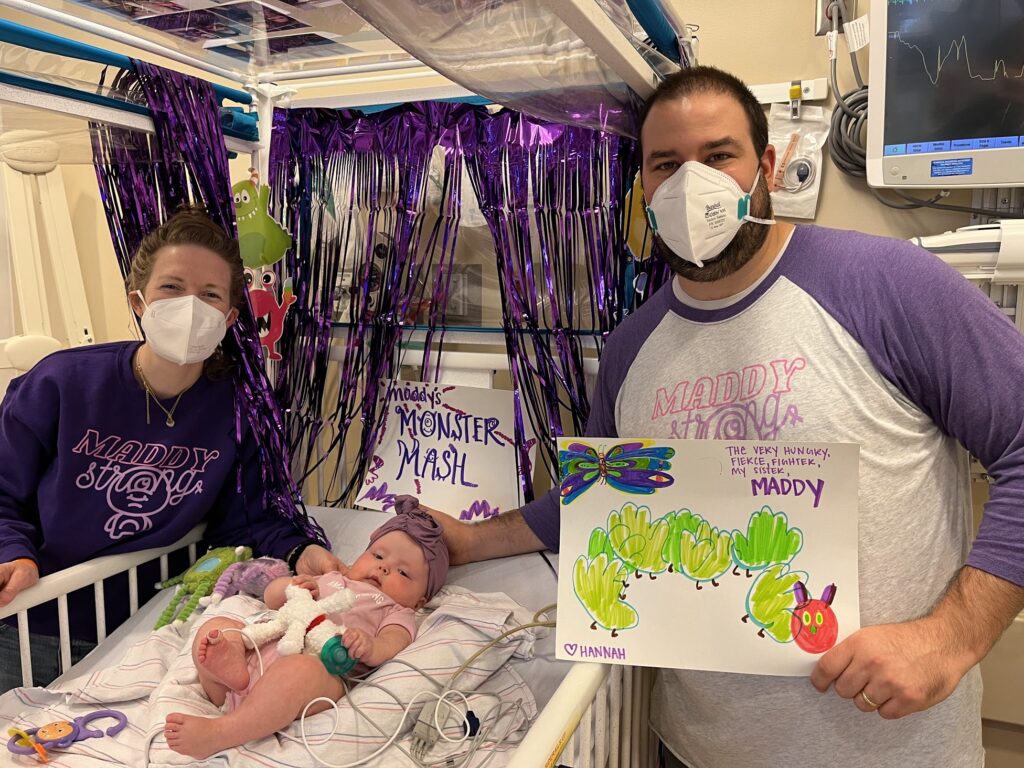
When you hear the words, “Your child has cancer,” the world stops.
This guide is here to help you take your next steps: clearly, calmly, and with confidence.
1. What You Need to Know Right Now
Your medical team will move quickly. That can feel terrifying. It can feel overwhelming. AND, it also means your child is getting immediate attention.
You will hear more information than your brain can possibly hold.
You do not need to understand everything today.
- It’s okay to ask questions more than once.
- It’s okay to say, “Can you explain that again?”
- It’s okay to say, “I don’t understand.”
If the Diagnosis Was Delivered Poorly
Some families are told during a meal.
Some are given false hope before being corrected.
Some are told by someone who lacks empathy.
If your experience felt wrong or hurtful, that is valid.
You deserved compassion. It is not your fault.
2. Immediate Action Checklist
Bring Organization Into the Chaos
- Bring a notebook and pen to every appointment.
- Write everything down.
- Take photos of whiteboards, schedules, medication lists.
- Have another adult with you to take notes.
- Keep a running list of questions in your phone.
Set Up Support
- Designate one person to update family and friends.
- Identify someone who can help with siblings or pets.
- Notify your employer — ask about FMLA or medical leave.
- Ask the hospital about:
- Overnight parent accommodations
- Parking passes
- Meal vouchers
- Lactation rooms (if applicable)
Ask Early For:
- A meeting with the social worker (this is critical).
- A clear explanation of who your primary oncologist is.
- The attending physician if you are uncomfortable with a trainee.
3. Understanding Your Child’s Diagnosis
Common Medical Terms
- Oncologist – Cancer specialist overseeing treatment.
- Resident – Doctor in early training.
- Fellow – Doctor specializing further in pediatric oncology.
- Attending Physician – Most senior doctor; final decision-maker.
- Biopsy – Tissue sample to confirm diagnosis.
- Protocol – The specific treatment plan.
- Port/Central Line – Device for medications and blood draws.
- Chemotherapy – Medicine that kills cancer cells.
- Radiation – High-energy beams that target cancer.
You may hear treatment phases like:
- Induction
- Consolidation
- Maintenance
Your team will provide a roadmap — but expect adjustments. Cancer treatment is rarely linear.
4. Questions to Ask Your Medical Team
Write these down and bring them with you:
- What type of cancer is this? What stage?
- What is the goal of treatment?
- How long will treatment last?
- What are short- and long-term side effects?
- How will this impact my child’s development?
- What symptoms require immediate attention?
- Who do I call after hours?
- Should we consider a second opinion?
- What support services are available?
- How does this treatment account for my child’s other conditions?
If a resident or fellow is speaking to you, you can say:
“I’d like to discuss this with the attending physician.”
That is your right.
5. You Have the Right, and Responsibility, to Advocate
Hospitals are systems. Systems are not perfect.
Doctors and nurses are human. Some are extraordinary. Some are rushed. Some are inexperienced.
You are your child’s constant.
You Can:
- Ask questions without apology.
- Request a different nurse.
- Seek a second opinion.
- Leave if you believe your child is safe to go home.
- Ask for an interpreter if English is not your first language.
- File a complaint if care is substandard.
Advocacy in Action: Giving Your Baby A Voice
Caregivers have shared:
- Being told to fast a breastfeeding baby for 8 hours with no procedure time. The Children’s Hospital of Philadelphia has researched-backed, updated guidelines.
- Having cancer symptoms dismissed for months.
- Receiving incorrect diagnoses initially.
- Watching inexperienced providers attempt procedures.
One parent insisted on going to the ER after being told it was “just a virus.”
That insistence led to a leukemia diagnosis.
Your intuition matters.
6. How to Advocate Effectively
Ask Clearly
- “Can you explain that more simply?”
- “Why are you recommending this?”
- “What are our alternatives?”
- “Can you write that down?”
Challenge When Necessary
- “That doesn’t match what we were told earlier.”
- “I’m not comfortable with that approach.”
- “My baby does better when we…”
Know the Hierarchy
Medical Student → Resident → Fellow → Attending Physician
You can always ask to move up the chain.
Especially in June and July, many new residents begin training. It is okay to ask about experience levels.
7. Understanding Your Care Team
Your child’s care involves many people.
Medical Team
Attending Physician / Oncologist
Oversees all treatment decisions.
Fellow
Specialized oncology doctor you may see often.
Resident
Doctor in early training.
Nurse Practitioner / Physician Assistant
Manages daily care and medications.
Nurses
Provide hands-on care and administer treatment.
Especially with babies, You may request consistent nurses when possible.
Support Team (Meet Them Early)
Social Worker
They are your lifeline! They can help with housing, finances, insurance, transportation, and emotional support.
Child Life Specialist
Uses play and age-appropriate tools to help your child cope.
Financial Counselor
Helps navigate billing and insurance issues.
PT / OT / Speech Therapists
Especially important for babies and toddlers. Developmental delays during treatment are common and early support matters.
Dietitian
Helps with feeding challenges and weight concerns.
Pharmacist
Answers medication and side effect questions.
Nurse Navigator (if available)
Helps coordinate appointments and next steps.
8. What No One Tells You
- You will not remember everything. That is normal.
- You may feel anger at the system.
- You may feel guilt. It is not your fault.
- You may feel fiercely protective. That is strength.
- You may surprise yourself with how capable you are.
9. A Final Word
You did not choose this.
But you are the right parent for your child.
You are allowed to ask.
You are allowed to question.
You are allowed to advocate loudly.
And, you do not have to do this alone.
The Madelyn James Foundation was created because families deserve emotional and logistical support, not just medical care. When the system feels overwhelming, connection matters.
Breathe.
Then take the next step.
__________________________
Maddy Double Waves to our sponsor at Ymabs!
Help us keep families together.
Every gift supports low-income families through pediatric cancer treatment.
Donate now